Is your patio door hard to slide? A sliding door that sticks, grinds, jumps off its track or needs both hands to open is a very common problem, especially on UPVC and aluminium patio doors that are more than a few years old. In most cases the door itself is fine. The fault is usually in the rollers, the track or the adjustment, and it can be repaired in a single visit.
This guide explains the warning signs, the six most common causes, what you can safely check yourself, and when to call a sliding door repair specialist in Berkshire or Surrey.
Signs Your Sliding Patio Door Needs Attention
- The door is heavy or stiff to open and close
- You hear grinding, scraping or clicking as it moves
- The door jumps, wobbles or comes off the track
- There is a visible gap at the top or bottom of the door
- The lock or handle will not line up with the keep
- Draughts or rain getting in along the edge of the door

Patio Door Hard to Slide? 6 Common Reasons
1. Dirt and debris in the track
Grit, leaves, pet hair and small stones collect in the bottom track. The rollers have to ride over this debris, which makes the door stiff and wears the wheels faster.
2. Worn or broken rollers
Patio doors sit on small wheels called rollers. Over time the bearings wear out, the wheels crack or flatten, and the door starts to drag on the track instead of rolling. This is the single most common cause of a patio door that is hard to slide.
3. Damaged or bent track
A dented, bent or worn track creates bumps the door has to climb over. Aluminium tracks can wear into grooves, and UPVC tracks can crack. A damaged track usually needs repairing or capping, not a new door.
4. Rollers out of adjustment
Most sliding doors have adjustment screws that raise or lower the door on its rollers. If the door has settled or was never set correctly, it can rub on the track or the frame.
5. Movement in the frame
Seasonal temperature changes and normal house movement can push a frame slightly out of square, so the door catches at one end of its travel.
6. Worn locks and handles
Sometimes the door slides well but feels stuck because the lock or handle is not releasing fully. Worn mechanisms are common on older patio doors and can be replaced on their own. See our guide to windows that will not lock for similar problems on windows.
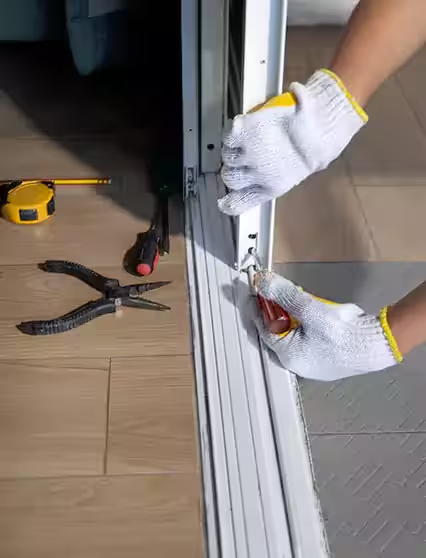
What You Can Safely Check Yourself
- Vacuum the bottom track, then wipe it with a damp cloth to remove grit.
- Check the track for dents, cracks or loose sections.
- Clean the top guide channel as well as the bottom track.
- Avoid oil or grease on the track. They attract dirt. A silicone spray on the rollers is safer if the manufacturer allows it.
- Do not force a door that has jumped off its track. Patio door panels are very heavy and can fall.
If the door is still hard to slide after cleaning, the rollers or track are most likely worn and need professional repair.
Repair or Replace Your Patio Door?
Replacing rollers, repairing the track and adjusting the door is far cheaper than a new patio door, and in most cases gives a smooth, quiet slide again. Replacement is only worth considering if the frame is badly damaged or the glass units have failed across the whole door. Even misted glass can usually be replaced on its own.
Security and Energy Efficiency
A patio door that does not close properly is a security risk, because the locking points may not fully engage. The police-backed Secured by Design crime prevention advice highlights doors and windows as a key part of home security. A poorly fitting door also lets warm air escape, and the Energy Saving Trust explains how draughts around doors increase heating bills.
Patio Door Repair in Berkshire and Surrey
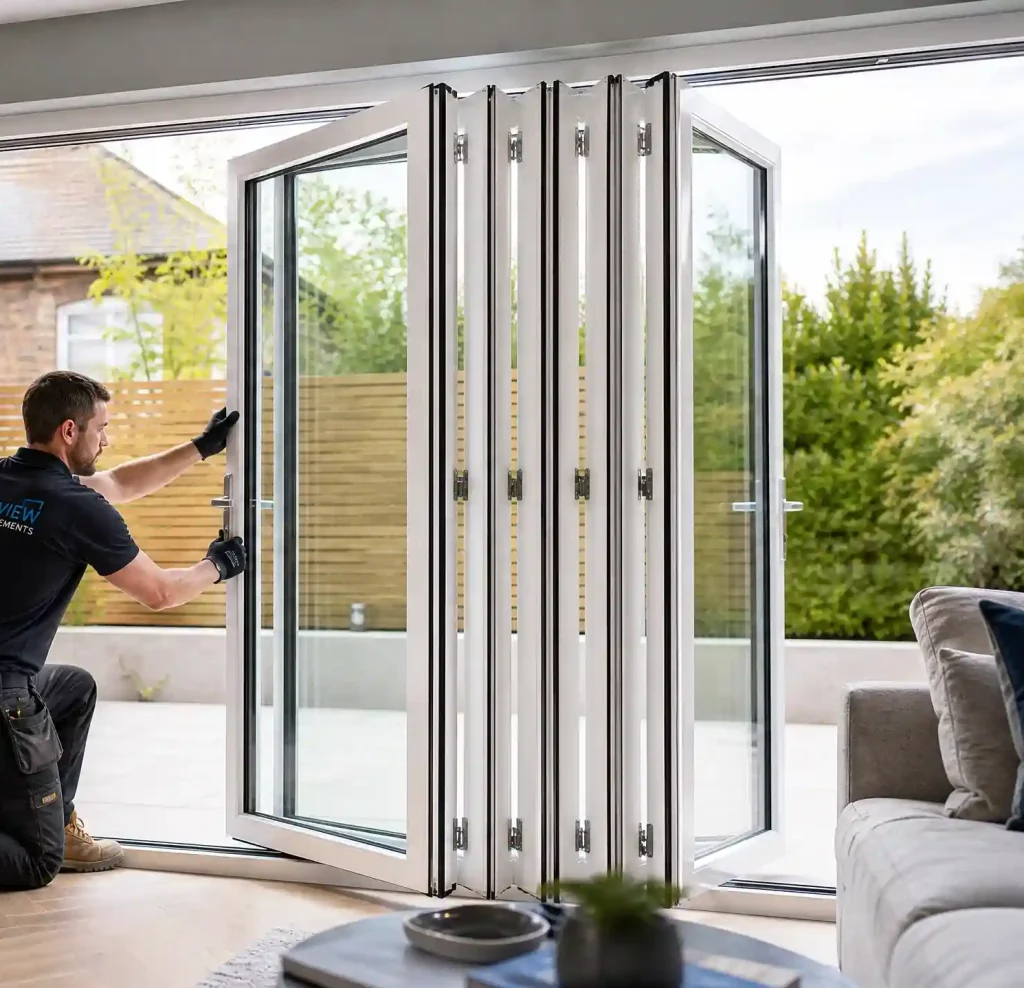
Our local engineers repair sliding patio doors and bifold doors every week. We replace rollers, repair and cap tracks, adjust doors, and fix locks and handles, usually in one visit and without replacing the door.
- Sliding door track repair
- Sliding door track repair in Surrey
- Bifold door repair in Berkshire and Surrey
- Door repair in Berkshire and Surrey
- Free quotes: contact us or call 07951 152986
Have a front or back door that sticks instead? Read our guide to a dropped UPVC door.
Frequently Asked Questions
Why is my patio door hard to slide?
The most common causes are dirt in the track, worn rollers, a damaged track or rollers that need adjusting. Cleaning the track helps, but worn rollers need replacing.
Can patio door rollers be replaced?
Yes. On most UPVC and aluminium sliding doors the rollers can be replaced without replacing the door. The door panel is lifted out, new rollers are fitted and the door is adjusted.
Should I use WD-40 on my patio door track?
It is best to avoid oily sprays on the track because they attract dirt. Clean the track thoroughly, and use a silicone-based lubricant on the rollers only if the manufacturer recommends it.
How long does a patio door roller repair take?
Most roller and track repairs are completed in a single visit. If a specific roller needs ordering, we identify it on the first visit and return to fit it.